
Most KAM programs don’t fail because of bad strategy. They fail because strategy never makes it into the day-to-day. This post is about closing that gap.
In the last post, we discussed where to start in building a KAM program from scratch. Now, let’s go deeper on how to operationalize the process and mobilize cross-functional teams around your most strategic customers.
Start With an Honest Assessment
Before you can design where you’re going, you need a clear-eyed view of where you are.
Ask yourself: How does your organization currently approach customer discovery, account planning, cross-functional team activation, and measurement? Where are the gaps? And critically — which of those gaps, if closed, would have the most immediate and meaningful impact on your business?
This isn’t about cataloguing every imperfection. It’s about prioritizing ruthlessly so your energy goes where it matters most.
Design Your Future State — Deliberately
There’s no universal definition of KAM excellence. The right future state depends on your strategic imperatives, where KAM fits within your broader go-to-market strategy, and your team’s current capability level.
For some organizations, the goal is best-in-class customer discovery. For others, it’s a solid baseline across all stages. Neither is wrong. What matters is that the vision is intentional, grounded in your reality, and socialized with the people who need to support it.
Once you’ve settled on your desired future state, the next challenge is making KAM part of your standard operating procedure — not another layer of administrative work. The tools below are how you do exactly that — turning the right intentions into repeatable behavior.
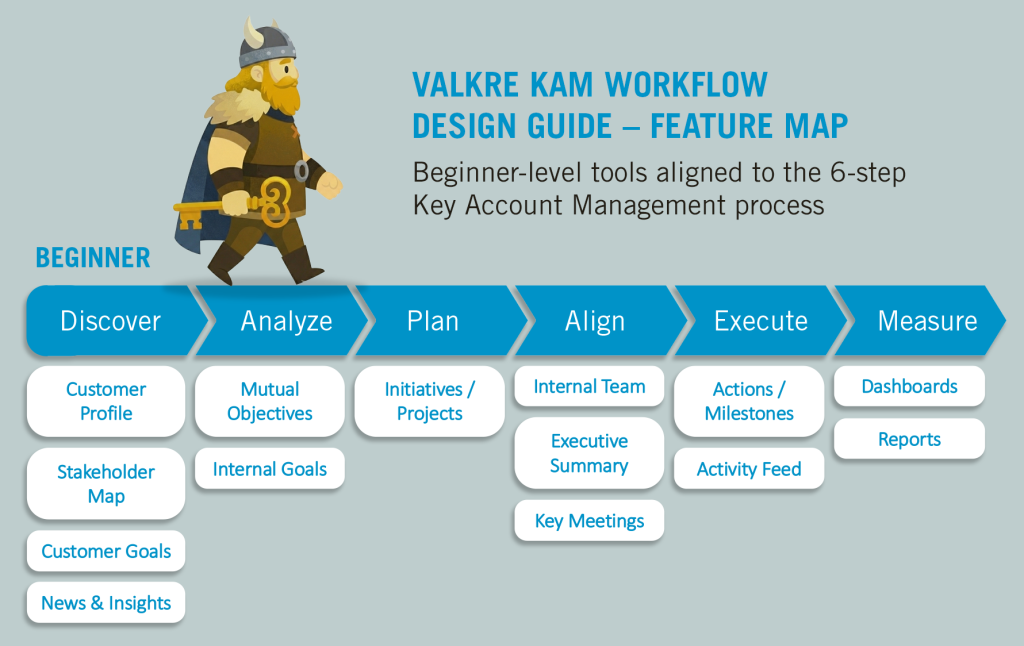
Tools Aligned with SAMA’s 7-Step Process
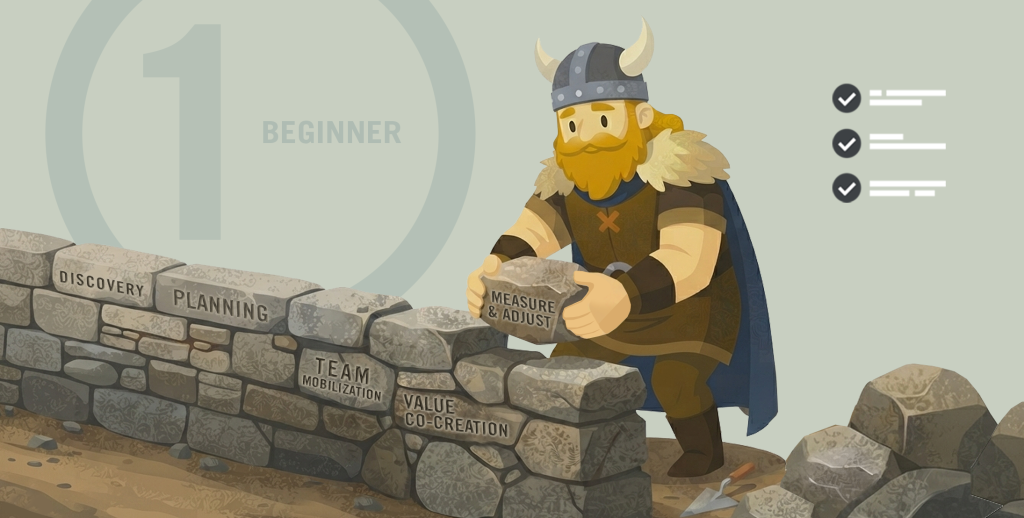
When done well, KAM follows a fairly consistent workflow. Start with where you are today and layer in key behaviors and actions with measurable metrics to assess how the team is developing capabilities and KAM process maturity.
1. Customer Discovery
It begins with understanding what’s happening in your customer’s world — their market trends, competitive pressures, strategic goals, and the obstacles standing in their way. Who are the key stakeholders? What are they trying to accomplish?
Suggested Tools/Frameworks – Discovery
Customer Profile
What is it? A consolidated overview of each account.
Why do we do this?
- Provides context to team members who don’t know the day-to-day
- Collects insights about the customer to inform the account plan
Example KPIs:
- Profile completeness
- Updated within the last six months
Customer Goals
What is it? The customer’s top strategic objectives.
Why do we do this?
- Documents the high-level goals driving the customer’s business
- Informs account plan strategies and actions that support those goals
Example KPIs:
- At least three goals ranked by importance
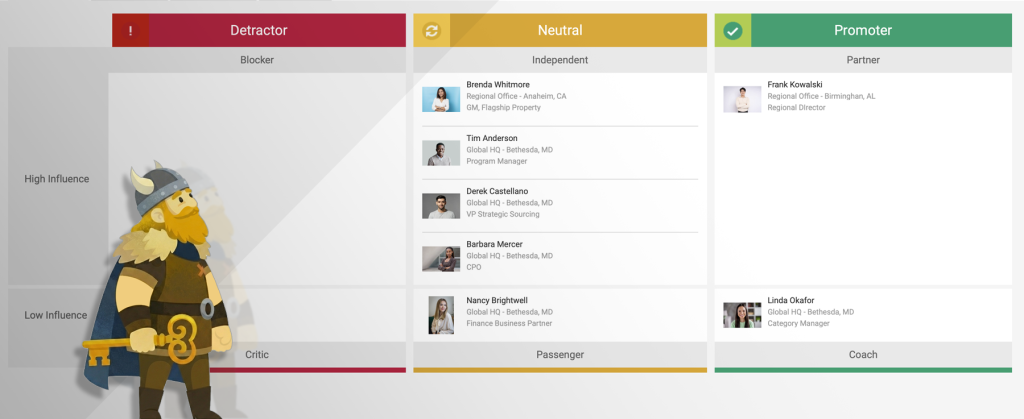
Stakeholder Map
What is it? A comprehensive view of those who set and influence strategy at an account.
Why do we do this?
- Identifies and prioritizes who to engage with strategically
- Maps individuals to surface gaps in influence and advocacy
- Shares key stakeholder details with the broader account team
Example KPIs:
- Completed influence/advocacy matrix with 5+ stakeholders
- Updated within the last six months
News & Insights
What is it? A recap of recent, relevant topics related to the customer’s world (ideally AI-powered).
Why do we do this?
- Provides broader context on the customer’s market realities
- Informs account plan strategies and actions
Example KPIs:
- A robust newsfeed with updates within the last 30 days
- 1–2 key insights derived from recent news
2. Strategic Account Planning
Most account plans are really just sales plans in disguise. This stage is where KAM earns its name — mapping your customer’s needs against your value proposition and identifying where you can genuinely co-create value together.
Suggested Tools/Frameworks – Analyze & Plan
Mutual Objectives
What is it? A consolidated view of the goals both you and your customer are working toward together.
Why do we do this?
- Aligns internal and external teams around shared outcomes
- Provides a north star for the account plan
Example KPIs:
- Objectives documented and validated with the customer
- Updated within the last six months
Internal Goals
What is it? Your organization’s specific commercial and strategic goals for the account.
Why do we do this?
- Anchors the account plan in business outcomes that matter internally
- Ensures the KAM team is accountable to measurable targets
Example KPIs:
- Goals documented and reviewed with leadership
- Updated at least annually
Initiatives / Projects
What is it? The actual work — how you support an objective and advance a goal.
Why do we do this?
- Turns high-level objectives into specific efforts for both parties to work on
- Creates a shared agenda and joint roadmap with the customer
Example KPIs:
- Clear linkage to objectives and customer goals
- Timely project execution (e.g., 1–2 per year)
3. Cross-Functional Team Mobilization
A KAM can’t execute alone. Aligning the right internal functions — and giving them a sense of ownership and urgency — is what separates organizations that plan well from those that actually deliver.
Suggested Tools/Frameworks – Align
Internal Team
What is it? A list of cross-functional team members supporting the account.
Why do we do this?
- Creates visible accountability across the team
- Builds “stickiness” through multiple customer connections
Example KPIs:
- Fully populated team roster
- Active customer engagement reviewed quarterly
Executive Summary
What is it? A brief narrative on the current and future state of the account.
Why do we do this?
- Provides instant context for any stakeholder
- Articulates the “so what” of the account plan
Example KPIs:
- Summary completion
- Updated within the last 90 days
Key Meetings
What is it? A running log of recent customer engagements.
Why do we do this?
- Captures institutional memory amid team changes
- Demonstrates consistent, purposeful engagement
Example KPIs:
- % of meetings involving key stakeholders
- 2–3 Quarterly Business Reviews per year
4. Value Co-Creation
This is the execution phase, where the real work gets done. Document progress, escalate roadblocks, celebrate small wins, and run your reviews off live systems of record — not polished slide decks. Coach to facts, not anecdotes.
Suggested Tools/Frameworks – Execute
Actions / Milestones
What is it? Specific tasks and milestones with assigned owners and due dates.
Why do we do this?
- Converts strategy into motion
- Creates shared accountability across the team
Example KPIs:
- No at-risk or overdue actions
- Action completion rate reviewed monthly
Activity Feed
What is it? A real-time log of all updates made to the account plan.
Why do we do this?
- Provides broad visibility into who’s working on what
- Demonstrates forward momentum for all stakeholders
Example KPIs:
- Updated within the last 30 days
- Number of unique contributors
5. Measure and Adjust
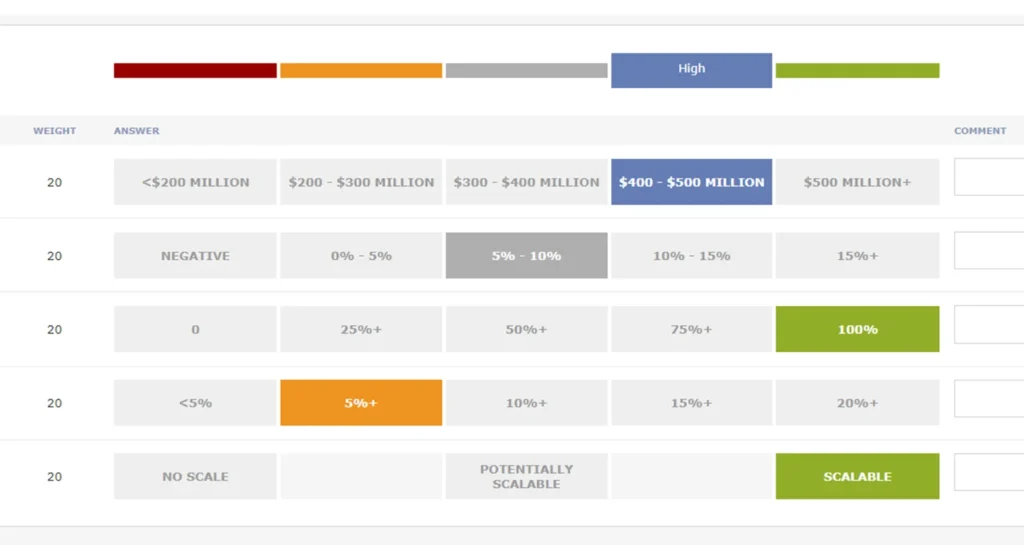
What gets measured gets managed — but only if you’re measuring the right things. Track both leading and lagging indicators and share results with internal and external stakeholders for full accountability. Leading indicators are early warning signals that allow leaders to intervene before lagging metrics disappoint.
Suggested Tools/Frameworks – Measure
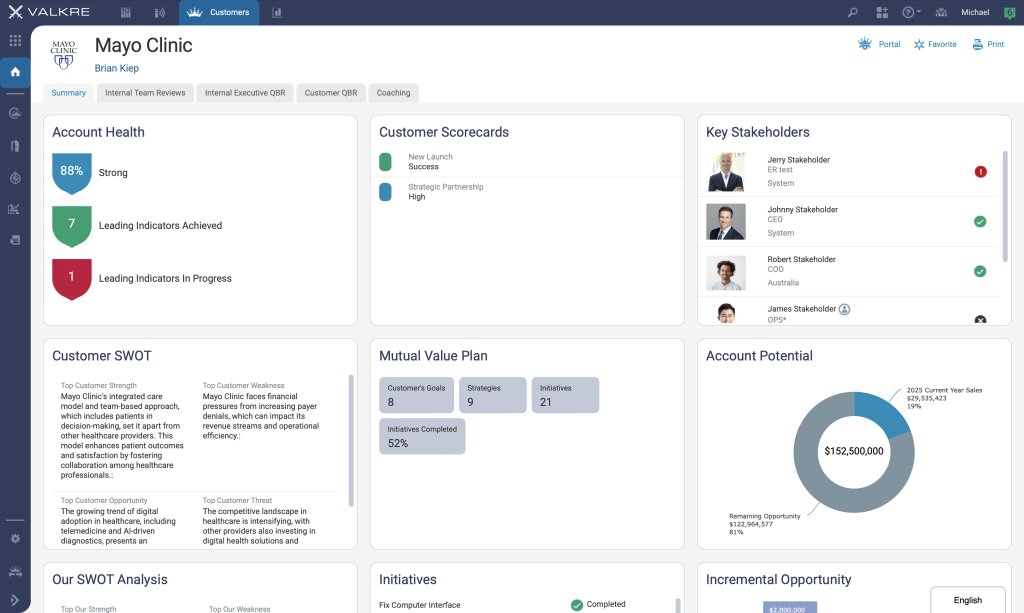
Dashboards
What is it? Visual charts and graphs for both leading and lagging indicators of program health.
Why do we do this?
- Provides a single view of what’s working and what’s not
- Balances backward-looking metrics with forward-looking signals
Example KPIs:
- % of accounts with a green health score
- Portfolio-level objective completion rate
Reports
What is it? Structured data pulls to answer specific program questions.
Why do we do this?
- Turns platform activity into actionable insights
- Creates a consistent cadence of accountability
Example KPIs:
- Account plan completion and quality score
- Achievements within the last 30 days
The Tools That Make It Real
Frameworks are only as good as the habits they create. The tools embedded in each stage of the KAM process — customer profiles, stakeholder maps, co-creation logs, value scorecards — are the mechanism by which strategy becomes behavior.
You don’t need a sophisticated platform to get started. Offline templates work well in the early stages. Engaging with communities like SAMA and AKAM is one of the best investments you can make — both for the frameworks they offer and the practitioners you’ll connect with.
When you’re ready to move beyond templates, platforms like Valkre embed these tools directly into your workflow, turning best-practice KAM into your team’s default operating mode. If you’re curious what that looks like in practice, we’d love to show you.
Partner Perspectives
In this section, we link to content from our partners in the strategic account management community. Please note some content may require a paid membership.
LEARN MORE
For additional guidance on building a successful KAM program, watch this video about “Fundamentals for Building an Award-Winning SAM program” from the Association of Key Strategic Account Management Association (SAMA).
Put It to Work
If you’re not sure how to design a formal KAM program, start by asking yourself three questions:
- How do you currently approach customer discovery, account planning, team activation, and measurement? Do you have common tools or templates the team finds useful?
- Where are the current gaps? Which ones can have the biggest or most immediate impact on your business?
- How can I learn from others who have already done this?
The answers will point you toward your first step. From there, collect artifacts of tools and frameworks and align them with your desired KAM workflow. Test and learn with small, cross-functional account teams and adjust as needed. Learn by doing — and aim for proficiency at the beginner level for at least six months before moving to an intermediate approach, which we’ll cover in a future post.
Conclusion
Designing a beginner-level KAM program is a blend of art and science, strategic thinking and tactical execution. Giving your teams a specific set of tools and frameworks aligned with an intentional methodology will guide them without being overly prescriptive — and position them to achieve the strategic business outcomes that matter most.